Small Apartment Decor: How to Choose
· 5 min · редакция hearthdaybook.com
How to choose small apartment decor by measuring paths and jobs first, with a furniture table, a renter-friendly checklist, and official energy and air notes.
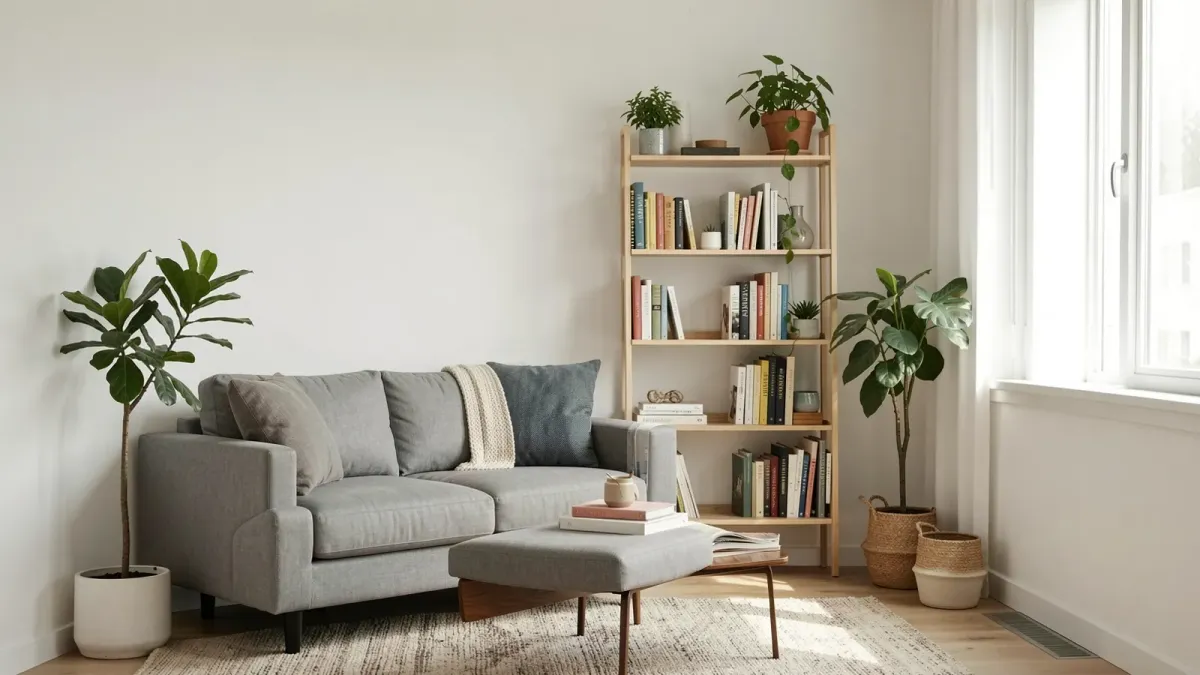
Choose a few functions, then choose the objects
Small apartment decor is easier when you start with what the room has to do, not with a style name. A one-room or two-room apartment may have to be a place to sleep, eat, work, and welcome one friend, sometimes in the same 200-odd centimeters of wall. The practical question is: which of those jobs happen every day, and which objects are earning their floor space?
This is a how-to-choose guide, not a shopping haul, and not a set of invented product tests. Measure first. Buy or move second. Style, including a color you love, comes after the sofa actually leaves a walking path to the balcony or the bathroom in the night.
If you are in a small apartment in a warm, bright climate, or in a compact city flat anywhere, the same physical rules apply: circulation, light, storage that is not a trip hazard, and materials you can clean. Energy habits still help in a small place. The Department of Energy notes that sealing obvious drafts, using lighting efficiently, and setting a water heater to a moderate 120°F where that advice applies can cut wasted energy without a renovation. See the Home Energy Checklist. Official guidance will not tell you which sofa to buy. It will remind you that comfort and utility bills are part of the same room.
Measure the path, not only the wall
Before you fall for a chair, walk the route you already use.
- Measure the wall, then measure the doorway and the stair or lift the piece must pass through.
- Leave a walking path you can use in the dark. A beautiful coffee table in the only path will be a bruise.
- Measure the bed's full use, including a place to stand and make it.
- Measure the table with chairs pulled out, not tucked in.
- Look at outlets and window openings so a cabinet does not block either.
Write the numbers down. Memory flatters large furniture.
| Piece | What "fits" should mean in a small apartment | A frequent mistake |
|---|---|---|
| Sofa or daybed | Sitting for daily life, and a path around at least one side | A deep sofa that turns the room into a single dead end |
| Table | Eating or working, with chairs that can tuck in | A four-person table in a room that only ever seats two |
| Storage | Closed storage for daily mess, at a height you will actually use | Open shelves that display clutter you meant to hide |
| Lighting | One good overhead or wall light, plus a lamp where you sit or read | A collection of tiny decorative lights and no usable brightness |
| Rug | A size that anchors the sitting area without curling under a door | A rug so large it bunches at every threshold |
| Curtain or blind | Privacy and glare control, with hardware that suits the landlord's rules | A treatment that blocks the only daylight in the name of drama |
Folding and nesting pieces are useful when you will actually fold them. They are clutter when they stay open forever. Be honest.
Light, air, and a calm visual load
Small rooms feel larger when they are not asked to display everything you own. A short palette, a few closed cabinets, and one object with personality will usually beat a theme. Mirrors can move light around; they cannot invent a second window, and a wall of mirrors is not a requirement.
Daylight is a decorating tool you already have. Keep bulky storage off the only window wall if you can. Use lighter curtains if you need privacy without turning the room off. In a hot climate, blocking fierce afternoon sun can matter as much as style; in a dark climate, hanging a heavy drape over the only light is a costly choice. Neither is a moral failure. Both are decisions you can test with a cheap temporary curtain before you buy a custom one.
Ventilate when you use strong paints, sprays, or cleaners, as EPA indoor-air guidance recommends, and store leftover products closed and safely. Official pages such as Care for Your Air are worth a look before a weekend of refinishing furniture in a closed studio.
A choosing checklist for small apartment decor
- You have measured doorways, lifts, and the walking path, not only the wall
- Each large piece has a daily job
- There is a place to put bags, keys, and laundry that is not the bed
- Lighting is usable for reading or cooking, not only decorative
- Window treatments can be changed without breaking a rental rule, if you rent
- Storage has a door or a basket if you want the room to look finished on a Tuesday
- You can clean under or around the pieces you are adding
- You will not block outlets, air-conditioning units, or required exits
- You have a budget ceiling and will stop when the path already works
If a piece is only "cute" and has no job, it needs a very small footprint, or it needs to wait.
A calm order of work
Clear the floor first. Place the largest piece. Make the path. Then add the table, then lighting, then storage, then the objects you love. Decorating in the opposite order is how a lamp collection arrives before anyone can open the sofa bed.
Live with the arrangement for a week before you buy a second round. A small apartment tells you quickly whether a chair is in the way. Listen to that information. The goal is a room you can keep, not a room that looks finished for one photograph.
Questions to ask before you buy another piece
What is the first thing I should buy for a small apartment?
A way to sleep comfortably, a way to sit and eat, and working light. Decor comes after those three. A plant, a print, and a good lamp can wait until the path is clear.
How do I make a small apartment look larger without fake "designer tricks"?
Keep the floor as clear as you can, use closed storage, and do not block daylight. A consistent, quiet color on the large surfaces helps. You do not need a special trick. You need fewer obstacles.
Can I use dark colors in a small apartment?
Yes, if you like them and you still have enough light to live. A dark wall can be handsome behind a bed or a sofa. A dark, heavy treatment on the only window is a different decision. Test with a sample if you can.
How do I decorate a rental without making holes I will regret?
Use the hardware you are allowed to use, lean frames where it is safe, and choose heavy items that stand on their own. Check the lease. Command-style hooks and similar products have limits; follow their labels and your landlord's rules, and keep receipts for anything you may need to reverse later.